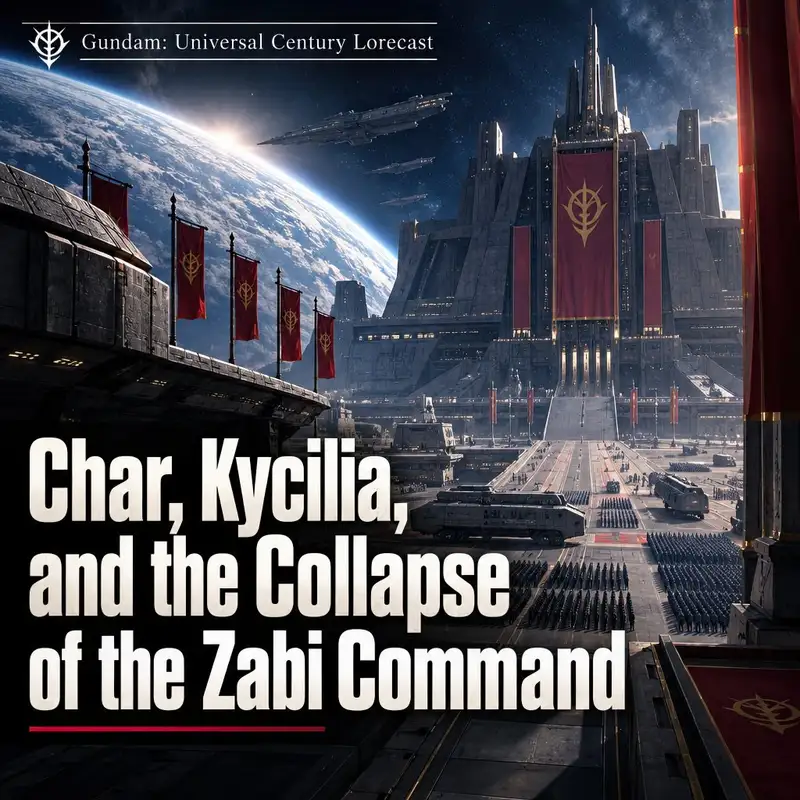
Char, Kycilia, and the Collapse of the Zabi Command
The military significance of Char, Kycilia, and the Collapse of the Zabi Command is clearest when placed inside the return to space and the final campaigns that destroyed the Principality of Zeon. The analysis concentrates on dynastic power, totalitarian mobilization, divided co…
The military significance of Char, Kycilia, and the Collapse of the Zabi Command is clearest when placed inside the return to space and the final campaigns that destroyed the Principality of Zeon. The analysis concentrates on dynastic power, totalitarian mobilization, divided command, and the political structure behind Zeon’s war effort, with attention to what leaders can know, mobilize, sustain, and risk. Zeon’s early cohesion conceals rival chains of loyalty, making internal politics increasingly important as military setbacks expose fractures inside the Zabi leadership. The supplied chronology sets the boundary, so alternate retellings, manga, games, and side continuities are not silently merged beyond what the title itself establishes. Its position matters because the wider campaign shows how mass production, Newtype weapons, late-war mobilization, industrial exhaustion, and collapsing political command decide the war faster than any one prototype can. Seen this way, the episode connects combat power to logistics, intelligence, legitimacy, industrial capacity, and political purpose. Visit ImaginedBattlefield.com for more military and science fiction.